TransferTableFixtureStats
Update : 16 Mar 09
Premierleague
No.
Team
Pl
W
D
L
Gd
Pts
1
Man United
28
20
5
3
33
65
2
Chelsea
29
18
7
4
33
61
3
Liverpool
29
17
10
2
28
61
4
Arsenal
29
14
10
5
19
52
5
Aston Villa
28
15
7
6
13
52
UCL
No.
Team
Pl
W
D
L
Gd
Pts
1
Liverpool
6
4
2
-
6
14
2
Atl.Madrid
6
3
3
-
5
12
3
Marseille
6
1
1
4
-2
4
4
PSV
6
1
-
5
-9
3
FA Cup : 4th Round V Everton (L) 0 - 1
Carling :
4th Round V Spurs (L) 2 - 4

Tuesday, December 30, 2008

New Year ^^


New Year London , 2009
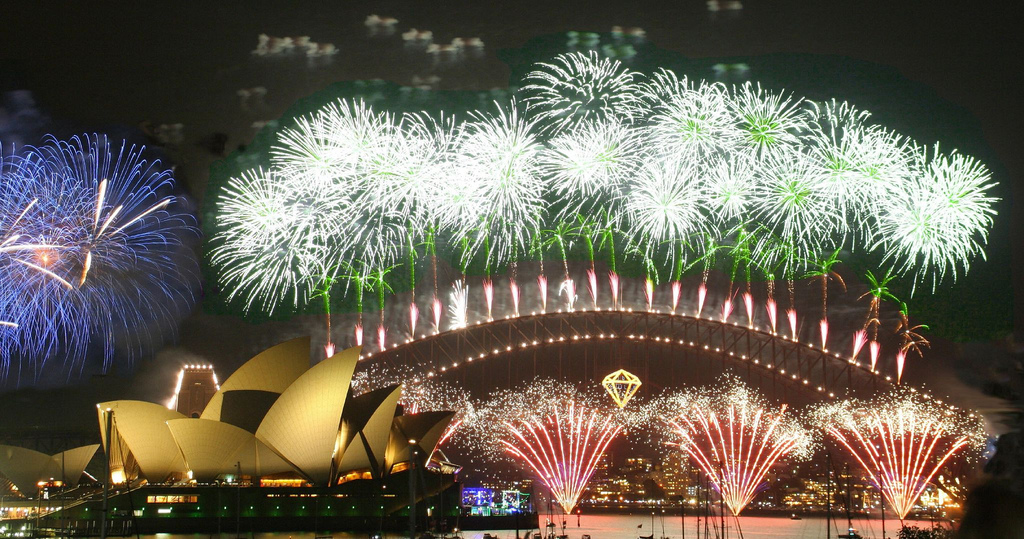

The New Year is an event that happens when a culture celebrates the end of one year and the beginning of the next year. Cultures that measure yearly calendars all have New Year celebrations

File:OperaSydney-Fuegos2006-342289398.jpg

Sydney leads the world in one of the first major New Year celebrations each year.

File:London fireworks.jpg

London too has a major New year celebrations.


In countries governed by the Gregorian calendar, the celebration of New Year is celebrated on January 1, the date that is considered the most festive of them.

Traditionally, the Roman calendar began the first day of March. However, it was in January (the eleventh month) when the consuls of ancient Rome assumed the government. Julius Caesar, in 47 BC, changed the system, creating the Julian calendar, with some modifications in the time of Marco Antonio consul in 44 BC, the emperor Augustus Caesar in 8 BC and finally by Pope Gregory XIII in 1582, is used today. In this year begins on January 1. Subsequently, the Gregorian calendar had the habit and the celebration was marked with a religious significance during the Middle Ages and later centuries.

With the expansion of Western culture to the rest of the world during the twentieth century, the January 1 date became a universal in nature, even in countries with their own New Year celebrations (e.g., China).

At present, the celebration of New Year is a major event in the world. Major events are held in major cities around the world New Year's Eve (New Year's Eve for the December 31), being accompanied by the largest fireworks events. The largest events in the world are focused on:

While in Sydney was launched at midnight over 80,000 fireworks to more than one and a half million attendees, being the most-watched event on television worldwide last year at Valparaiso receive more than two million visitors to witness the largest fireworks in a natural setting and the huge worldwide; a total of more than 21 kilometers of fireworks on the bay, from the commercial port city of Valparaiso to Concon, Chile, all in 25 minutes of entertainment. In New York, the celebration is focused around a big crystal ball that descends on a crowd in Times Square, is also the party with the largest number of attendees last year: more than three million people. Moreover, much of the huge holiday clubs.

In the culture of Latin America there are a variety of traditions and superstitions for these dates as a way of omens for the coming year. The uncorking a bottle of champagne at 0:00 1. January still remains a symbol of New Year's celebration.

The New Year feast is closely related to the celebration of Christmas Eve, Christmas and Hannukah. Due to the closeness between all these parties is that much of the world sees the last week of the year as the beginning of the holiday period, either in winter (in the Northern Hemisphere) or summer (in the Southern Hemisphere).

According to the Judeo-Christian tradition, on January 1 coincides with the circumcision of Christ (eight days after birth), when the name of Jesus (Luke (II: 21)).

File:Año Nuevo.jpg


Saturday, December 27, 2008

Boxing Day


Boxing day, 2008


Boxing Day
Boxing Day
Line for Boxing Day sale outside a Future Shop
store in Canada.

Boxing Day is a public holiday in the United Kingdom, Australia, Canada, New Zealand, Hong Kong, countries in the Commonwealth of Nations with a mainly Christian population, and parts of the United States. In South Africa, this public holiday is now known as the Day of Goodwill. It is based on the tradition of giving gifts to the less fortunate members of society. Contemporary Boxing Day in many countries is now a "shopping holiday" associated with after-Christmas sales.

This day is historically England's name for St. Stephen's Day. Saint Stephen was the first Christian martyr, being stoned to death in Jerusalem around A.D. 34-35. St. Stephen's Day is usually celebrated on December 26, which is a public holiday in some countries or areas in Europe (UK, Germany, Italy, Alsace, northern part of Lorraine, Catalonia) and around the world with predominantly Christian populations. In the Eastern Orthodox Church, St Stephen's Day is celebrated on the 27th of December, although in Greece the Greek Boxing Day (Synaxis Theotokou, Σύναξις Θεοτόκου) is also celebrated as a public holiday on the 26th of December and is not related to the English version.

In Ireland the Bank Holidays Act 1871 established the feast day of St. Stephen's Day as a non-moveable public holiday on December the 26th, although since partition the name "Boxing Day" is used by the authorities in Northern Ireland and it has become a moveable public holiday in que with the rest of the UK. The Banking and Financial Dealings Act of 1971 established "Boxing Day" as a public holiday in Scotland. In the Australian state of South Australia, December the 26th is a public holiday known as Proclamation Day.

It is usually celebrated on the 26th of December, the day after Christmas Day however, unlike St. Stephen's Day, Boxing Day is not always on the 26th of December: its associated public holiday can be moved to the next weekday if the 26th of December is a Saturday or Sunday. The movement of Boxing Day varies between countries.


Wednesday, December 24, 2008

Semantic Web

The "semantic Web" does not sound like it's fun and easy to use, but it could make surfing Web 3.0 a more rewarding and interactive experience. Some believe it could even lead to a new form of artificial intelligence.

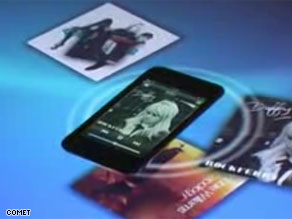
Spotlets pop up on a 'semantic Web' kiosk run by a pair of German researchers.

Spotlets pop up on a 'semantic Web' kiosk run by a pair of German researchers.

The idea behind the semantic Web, very broadly, is that things on the Internet will be described with descriptor languages so that computers can "understand" what they are.

An object might be a marked as a car part or a person, for instance. If objects were thus identified, an enormous network of linked data would emerge and machines, with their vast processing speeds, could suggest surprising and useful links that the human mind could never come up with, posing the possibility of a new sort of artificial intelligence.

The semantic Web is considered a key part of the upcoming "Web 3.0." It's starting to occur here and there, but widespread adoption is still a long way off.

A pair of German researchers have created an experimental kiosk that lets you easily use semantic Web capabilities -- even if you have no idea what they are. All that is needed is an iPhone and a finger with which to drag icons around on the kiosk's touch screen.

The kiosk takes advantage of the fact that MP3 files are "things" that have already been described in ways that machines can understand. That's because they have ID3 tags, which supply information on the artist and album.

http://s4.dancingsantacard.com/default.aspx?santa=3410763

Tuesday, December 23, 2008

BEIJING, China

BEIJING, China (CNN) -- China in 1978 was stranded at a political crossroad. It was just emerging from the chaos of the Cultural Revolution and the death of Chairman Mao. Deng Xiaoping had emerged as the new leader, but Mao's dogma remained deep-rooted and seemingly immutable. In and outside the Communist Party, a debate raged: Where to, China?

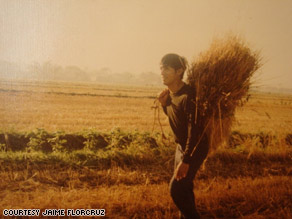
CNN Beijing Bureau Chief Jaime FlorCruz worked on a farm in China's Hunan province during the 1970s.

CNN Beijing Bureau Chief Jaime FlorCruz worked on a farm in China's Hunan province during the 1970s.

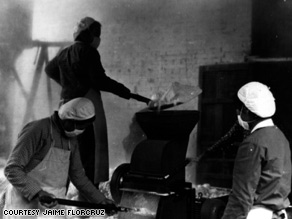
Inside a Beijing factory during the early 1970s, long before "Made in China" became the national brand.

Inside a Beijing factory during the early 1970s, long before "Made in China" became the national brand.

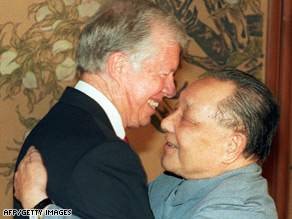
Deng Xiaoping (right) and former U.S. president Jimmy Carter

Chinese leader Deng Xiaoping embraces former U.S. President Jimmy Carter in Beijing in 1987.

-------------------------------------

On December 18, 1978, Chinese leader Deng Xiaoping gave his answer. In a Communist Party meeting in Beijing that day, the political elite adopted Deng's pragmatic program and launched economic reforms. New China was born.

People paraded in the streets to celebrate. Families gathered around the dinner table, uncorked wine bottles and toasted each other.

Thirty years hence, China's radical makeover is apparent.

China now is nothing short of an economic miracle. Its economy has grown at an average of 9.8 percent since 1978, making it the fourth largest economy in the world. Incredibly, China has pulled off the equivalent of reform, renaissance and industrial revolution in 30 years. Video Watch what Deng unleashed »

It's incredible because only three decades ago China was so poor and isolated.

I saw it up close when I worked on a farm in Hunan province, Chairman Mao's hometown, not long after I first arrived in China in 1971. For several months, I worked there with a production team planting rice, picking tea leaves, feeding pigs and digging ditches. Farmers worked hard and lived Spartan lives. Once, I attended a meeting to honor model workers; they were awarded bath towels and wash basins.

Video Watch FlorCruz describe China's transformation since his arrival in 1971 »

Monday, December 22, 2008

Christmas day

Christmas

Christmas (IPA: /krɪsməs/), also referred to as Christmas Day or Christmastide, is an annual holiday celebrated on December 25 that marks and honors the birth of Jesus of Nazareth.The birth of Jesus, which is the basis for the anno Domini system of dating, is thought to have occurred between 7 and 2 BC. December 25 is not thought to be Jesus' actual date of birth, and the date may have been chosen to correspond with either a Roman festival,or with the winter solstice.

Modern customs of the holiday include gift-giving, church celebrations, and the display of various decorations—including the Christmas tree, lights, mistletoe, nativity scenes and holly. Santa Claus (also referred to as Father Christmas, although the two figures have different origins) is a popular mythological figure often associated with bringing gifts at Christmas. Santa is generally believed to be the result of a syncretization between St. Nicholas of Myra and elements from pagan Nordic and Christian mythology, and his modern appearance is believed to have originated in 19th century media.

Christmas is celebrated throughout the Christian population, but is also celebrated by many non-Christians as a secular, cultural festival. The holiday is celebrated around the world. Because gift-giving and several other aspects of the holiday involve heightened economic activity among both Christians and non-Christians, Christmas has become a major event for many retailers.

http://s4.dancingsantacard.com/default.aspx?santa=3410763 fun fun


http://edition.cnn.com/2007/TRAVEL/07/01/daily.snapshot/index.html

Friday, December 19, 2008

Second life

Second Life (abbreviated as SL) is a virtual world developed by Linden Lab which launched on June 23, 2003 and is accessible via the Internet. A free client program called the Second Life Viewer enables its users, called Residents, to interact with each other through avatars. Residents can explore, meet other residents, socialize, participate in individual and group activities, and create and trade virtual property and services with one another, or travel throughout the world, which residents refer to as the grid. Second Life caters for users aged over eighteen, while its sister site Teen Second Life is restricted to users aged between thirteen and eighteen.

Built into the client is a simple primitive based three dimensional modeling tool that allows any resident to build virtual objects. This can be used in combination with a scripting language called Linden Scripting Language which can be used to add functionality to objects. More complex three dimensional Sculpted prims, colloquially known as sculpties, textures for clothing or other objects, and animations and gestures, can be created using external software. The Second Life Terms of Service ensure that users retain copyright for any content they create, and the server and client provide simple Digital rights management functions.

Second Life has an internal currency, the Linden dollar (L$). L$ can be used to trade goods, land and services with other users. Virtual goods include buildings, vehicles, devices of all kinds, animations, clothing, skin, hair, jewelry, flora and fauna, and works of art. Land in Second Life is a valuable and scarce commodity and can be bought, sold or rented. Users may also offer items or services to other users in exchange for L$; services include "camping", working in stores, business management, entertainment (which prominently includes adult entertainment), custom content creation, and other personal services. L$ is usually purchased from other users with real-world currency; Linden Lab and others offer a brokerage service for these transactions. The most popular usage for the exchange of L$ for US$ is in order to pay Second Life's subscription fees. In spite of attracting large volumes of press coverage, only a very small percentage of Residents derive a net income from the economy.

In 2008, Second Life was honored at the 59th Annual Technology & Engineering Emmy AwardsPhilip Rosedale, President of Linden Lab, accepted the award. for advancing the development of online sites with user-generated content.


Second Life


Developer(s) Linden Research, Inc


Engine Proprietary, free, and open source software
Physics: Havok 4
Audio: FMOD


Platform(s)
Microsoft Windows
Mac OS X (10.4.11 or higher)
Linux i686


Release date(s) 23 June 2003


System requirements
Graphics


Input methods Keyboard, Mouse, Gamepad but minimum movement, 3Dconnexion Space Navigator.