
 |
|||||||||||||||||||||||||||||||||||||||||||||||||||||||||||||||||||||||||||||||||||||||||||||||||||||||||||||||||||||||||||||||||||||||||||||||||||||||||||||||||||||||||||||||||
| |||||||||||||||||||||||||||||||||||||||||||||||||||||||||||||||||||||||||||||||||||||||||||||||||||||||||||||||||||||||||||||||||||||||||||||||||||||||||||||||||||||||||||||||||


Thursday, June 23, 2011

Thursday, March 26, 2009
Charity blogger travels world on goodwill
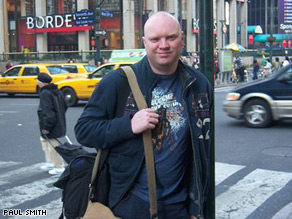
Paul Smith poses in New York in a picture posted on his Flickr page.
Paul Smith aims to travel to Campbell Island in New Zealand, the opposite side of the planet to his home in Newcastle-upon-Tyne, in northern England, and back again "to see if it's possible ... because it might be fun."
He also aims to raise money for a water charity, and has so far had more than $6,400 pledged in online donations.
Smith's self-imposed golden rule is that he can only accept offers of travel and accommodation from people who use Twitter, a micro-blogging service that allows people to "tweet" what they're up to (or what they're thinking about) in 140 characters or less.
He has been successful so far. Since starting his odyssey on March 1 with just a ferry ticket to the Dutch city of Amsterdam the journalist has visited France and Germany, before working his way across the United States.
Smith has more than 800 people following his progress on his Twitter page on which he has posted 1,000 updates this month. He has hitchhiked his way across the USA, stayed in plush hotel rooms and on airbeds on floors, met a Hollywood star and been interviewed on several TV shows.
On March 21 Smith flew from Los Angeles to Auckland, New Zealand through the generosity of an airline and is now trying to reach the uninhabited Campbell Island in his remaining days.
But in his most recent blog, posted on Monday, he admitted he faced an uphill battle against officialdom to travel to the UNESCO World Heritage site.
When told that traveling to Campbell Island required a long application process and asked if he would settle for visiting a nearby island instead, he wrote, "Absolutely not. Stewart Island sounded all very well and good, but I couldn't give up on Campbell Island yet.
Art, pizza and one crazy night in Chicago
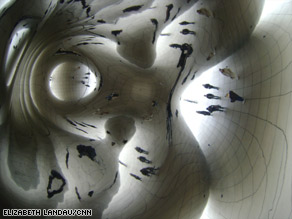
Underneath the "Cloud Gate" sculpture, the perspective gets distorted in the reflection.
Museum: The famous Art Institute of Chicago (111 S. Michigan Ave.) has enough rooms of artwork to keep a person exploring for days; unfortunately, I got there just before it closed at 5 p.m. Still, it was worth a peek.
In 15 minutes, you can see the impressive gallery of Impressionists, including Renoir and Monet, and dash through to some of the nearby rooms to glimpse medieval religious art. Allot more time to explore, if your schedule allows! For those who plan a little better, a number of works by painter Edvard Munch, famous for "The Scream," are on display until April 26.
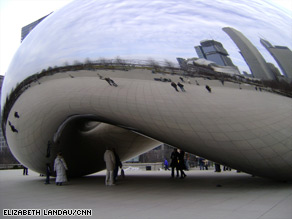
Stand back from "Cloud Gate," and you will see part of the city reflected in the sculpture.
Public art: Hey, look, it's a giant bean! Just a few blocks north of the Art Institute, this gigantic reflective sculpture called "Cloud Gate" weighs 110 tons, stands 33 feet high and is made of stainless steel plates. British artist Anish Kapoor designed it with liquid mercury in mind, says the Millennium Park Web site. Chances are, there's probably a bunch of tourists taking pictures of themselves reflected in it.
International food: Chicago has a plethora of cuisines from around the world. For my first dinner, I went to the Berghoff (17 W. Adams St.), a German restaurant near Millennium Park downtown. Even if you're alone, this is a fine place to sit at the bar, munching delicious wiener schnitzel and potatoes, and have casual conversations with the locals. The service is excellent, so if you're in a rush, you'll probably make your next appointment.
Bonus: Take the famous El train back to your hotel; there's a stop right on Adams Street.
Views: Night has fallen, and so has the temperature, but the adventure is just beginning. For a breathtaking view of the surroundings, take the fast elevator up to the Signature Room at the 95th in the John Hancock building (875 N. Michigan Ave.) and ponder the panoramic scenery over cocktails and snacks in the lounge on the 96th floor. The Chicago area is so flat that you can see for miles: endless rows of streetlights extending into the horizon. A chocolate martini and a view like that go well together.
Music: If you're still restless and eager for adventure, head to a different neighborhood. Lincoln Park, a trendy area north of downtown, has a slew of bars that cater to the young and the young at heart. Duffy's Tavern (420½ W. Diversey Parkway) will have either a live band or the standard selection of pop music. The local beer on tap, called 312 after the city's area code, has a refreshing lemon-wheat taste.
Movies: Can't sleep? Now that you've seen some of the city, maybe you'll recognize it in films. Chicago locals seem extremely proud of the presence of their city in last summer's Batman hit, "The Dark Knight." Try watching it on mute so you can focus on the scenery rather than the shooting, and maybe that will help you doze off.
Pizza: Don't leave Chicago without trying some of the famous deep-dish pizza. I was rushing to make my flight, but fortunately Giordano's (various locations throughout the city) accepts take-out orders half an hour in advance, even in the morning. Since there was a huge line for dinner the night before, in the morning I ended up ordering ahead and then eating half of it right there at the restaurant while my colleagues unhurriedly ordered at the table. Before their food came, I ran to get a taxi to the airport with pizza box in hand.
Saturday, March 21, 2009
Love on the Fly: Volunteer Vacations

Jamie Cann and his wife, Mary, returned recently from a trip to Tanzania. Jamie spent his days in a home for orphans and vulnerable children, teaching English and playing soccer with the kids. Mary taught English and math at a nearby primary school. "It was an incredible experience for us to share," says Jamie of the trip they booked through Cross-Cultural Solutions (CCS), an organization that matches would-be volunteers with teaching, health-care and community development projects in Africa, Asia, Eastern Europe and Latin America. "To do something like this, to share such an important, meaningful, experience has strengthened our relationship."
For Karen and Michael Crisafulli, the feeling is mutual: the pair actually met on a volunteer vacation in 1993 in Saragosa, Spain, where they helped with an archaeological study of farming societies in the area. Their trip was arranged by the EarthWatch Institute, a scientific research and education group focused on the environment. The Crisafullis have taken an EarthWatch trip every year since they met — Karen's favorite vacation to date was to Tuscany, where the couple spent two weeks restoring ancient fountains and tabernacles — though not every expedition has been taken together. "One year, he wanted to go to Belize in the middle of summer," says Karen. "The more we shopped for mosquito repellent and rain gear, the less I felt I could do it." Instead, she went off to the wilds of Virginia for an "interdisciplinary study on animals in the woods."
There is indeed a volunteer vacation for every persuasion. Depending on your particular passions, preferences and areas of expertise, you can go to Thailand to help rebuild ocean reefs damaged by the tsunami, or to New Orleans to rebuild houses. For the highly skilled there is a universe of choice — dentists and doctors are in demand all over the globe — but anyone can help schoolchildren learn math or gather rare plants in the Amazon as part of a conservation effort. And one need not be a saint to truly enjoy a volunteer vacation. The couples I interviewed said that one of the most rewarding things about volunteering was simply being immersed in an entirely different culture — something that might be said of every great journey. As for cost, although volunteer trips aren't exactly cheap, they may be tax-deductible, depending on the individual organization.
The payoff for couples can also be great: doing good on your time off can inspire a whole lot of love, if not exactly the traditional kind. I asked Karen Crisafulli, a 62-year-old retired schoolteacher, delicately, if there were any opportunities for romance on volunteer vacations. "No. I can say that unequivocally," she laughed.
But they breed a sense of togetherness that you might not have gotten otherwise. "I wouldn't characterize our trip as romantic. We've done romantic vacations, and this was not, but at the same time, it was better," says Jamie Cann. Also, many couples choose to volunteer in the same town, but work on separate projects — because communities and couples have different needs and talents — which they say makes you better appreciate your partner at the end of the day. Dava Antoniotti, who started working at Cross-Cultural Solutions after she and her partner, Kristin Lukasik, returned from a CCS-arranged trip to Peru, says the pair's recent stint in Morocco was the ideal balance of volunteering and couple-time. "I was working with special needs children. Kristin was working at a school," Antoniotti says. "Even though we were apart for four hours a day, we were together the rest of the time — which is fine because you don't want to overdo it," she laughs.
Joe Grant, 25, and his then girlfriend, now wife, Deanne, went the opposite route, spending six months together in the Masai Mara in Kenya building schools with Free the Children, an international organization whose goal is making primary education accessible for children everywhere. "I think the biggest challenge was just dealing with the suffering that some of the local community went through," says Joe. "It was hard to see the reality of really young kids dying of diarrhea."
But "it was a beautiful setting, beautiful people. Once you pass the hurdles of getting sick — and the scary snakes — it was really pretty great," he says.
Even though volunteer vacations don't leave much room for candles and flowers, says Antoniotti, they have been rejuvenating for her relationship. "Not that a typical vacation isn't fun, but if it's really easy, you don't have those experiences that stretch you," she says. "It's like in exercise how they say tiny tears in your muscles allow you to get stronger. Little things that take you outside of your comfort zone challenge you as a couple and make you stronger."
San Diego: The new super-yacht capital?
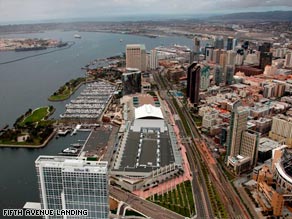
Though the international financial crisis has precipitated economic woe across the United States, developments in San Diego's super-yacht industry don't appear to be slowing.
Fifth Avenue Landing, a stylish new facility promising the ultimate docking experience for super-yachts up to 300 feet long, has just opened in city's downtown area. The marina, which is close to local attractions and top hotels, boasts 12 high-quality berths, each offering a concierge service.
This impressive project is just the latest step in a significant development program for the west coast city, which is which is now beginning to compete with its northern neighbor, Los Angeles, as a destination for super-yacht owners.
In 2005, Forbes rated San Diego as the fifth wealthiest city in the U.S. and in the years since, for the super-yacht industry particularly, the region has continued to develop rapidly.
Today, the city is buzzing with super-yacht designers, builders, and brokers, and it now has plenty of facilities to accommodate the industry. There's also the annual "YachtFest" show, which will be going ahead in September this year and is expected to attract interest from super-yacht makers and owners around the world.
Numerous marinas have sprung up amid the increasing interest in the city, with Kona Kai Marina, Shelter Island Marina, and The Wharf, among some of the most notable developments.
Outside of the private super-yacht industry, San Diego is also home to the largest shipyard on the west coast of the U.S. -- General Dynamics' National Steel and Shipbuilding Company. Many cruise lines pass through the port and there are plans for a new cruise ship terminal to open in 2010.
Much of the success in attracting super-yachts has been credited to the San Diego Super-yacht Association (SDSA) -- a collective of local super-yacht designers, builders, brokers and other interested parties that was formed in 2006.
Super-yacht director of Marine Group Boat Works and founding member of the SDSA, Fred Larsson, told CNN that the key to San Diego's recent profile boost was realizing the economic needs of the industry.
"San Diego had the basic requirements of super-yachts covered already with the natural deep water harbor, year round superb weather, geographic location as the gateway to the Pacific and a wonderful youthful city. Then when you add the super-yacht facility upgrades it's a no brainer. San Diego has it all," he said.
Larsson said the SDSA had been instrumental in developments as the combination of shipyards, marinas and suppliers working together means they have a good all-round knowledge of what super-yacht owners want when they come to port.
The combination of major refit facility improvements, new marinas, marina expansions and an effective marketing campaign are behind the success, he added.
Despite the international financial crisis, which threatens to hurt the super-yacht industry around the world, Larsson said that San Diego should not suffer too much as interest from owners is still growing.
"Due to the sheer size of the city and nearby cities there is so much for owners and crew to do here on their time off, the beaches are fabulous, Vegas is an hour away, there are 100 golf courses in and around San Diego.
Vancouver: Perfecting city life with the great outdoors
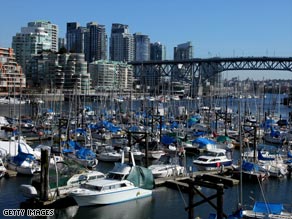
Winters generally don't get too cold (for Canada) and residents say if you experience the city in the summer you'll realize why its inhabitants exude a feeling of self-satisfaction and belief they do have it all. It's enough to have most other Canadians hate their smug West Coast cousins.
But visitors don't need to harbor any jealous thoughts: you can either grab a coffee (Local residents seem fueled by the stuff, but don't get things done any faster) and go all out trying to cram as much in as possible in a short visit, or be a bit more local and just take it easy, finding your own pace in the city.
Starting off in the city's downtown area you can work your way through various neighborhoods or head out into the great outdoors -- one of the city's main draws.
The proximity of the ocean, mountains, forests and islands to the city center make an excursion into "big nature" on a short trip not just possible, but probable. Public transport is efficient enough to be able to get you around town and into the nearby mountains.
The outward-bound nature of the place is happily countered by a laid-back vibe -- this is the West Coast after all -- where pockets of hippie counterculture exists with counterculture of the consumer variety.
Next to downtown Vancouver is Gastown, the city's historic area. Like many North American "old towns" it suffers for being a little too touristy, attracting day-trippers fresh off cruise ships. The turn of the century houses and cobbled streets are charming and the area is slowly shaking off its tourist trap image with more upscale bars and boutiques moving in to attract locals.
Vancouver has a rich mix of cultures and east of downtown around Pender and Carrall streets is the city's Chinatown. Worth a visit, it's the second-biggest Chinatown in North America, where you can sample sights, sounds and tastes more akin to Hong Kong than frontier Canada.
The area in between downtown and Chinatown is Vancouver's skid row, a scene of urban decay and poverty, so best to be avoided -- a reminder that there are still big city problems here.
Away from the Dr Sun Yat-Sen Classical Chinese garden and noodle joints, on the other side of downtown is Yaletown. The old warehouse district on the edge of False Creek has been gentrified with boutiques, coffee shops and restaurants and is a refined spot for a mid-morning coffee or bite to eat for lunch.
Gourmands would do worse than take a trip to Granville Island (it's really a promontory) and the public market place. Some of British Columbia's finest fresh produce as well as delicacies from across the world are housed in its covered market. Pick up some salmon jerky for a taste of real local flavor.
Post-prandial activity can vary depending on energy levels. Take a 15-minute water taxi ride from Granville Island to Bowen Island for a different scene and to enjoy a gentle stroll, or head to Stanley Park. It is just one mile from downtown and about 1,000 acres in size, so stick to the seawall path, where the cyclists, dog-walkers and roller-bladers roam, unless you want to make more of a day of it.
You'll also have some great views of the ocean and city. If the weather takes a turn for the worse while in the park, Prospect Point lookout or the aquarium offers some respite.
You can even feed otters at the aquarium, and if you've forgotten to book a hotel room for the night you can sleep with the fishes' (not in a threatening mafia way), but next to the Beluga whale tank, as the aquarium occasionally offers family sleep-overs.
The more adventurous spirited can head to Vancouver's north shore and the edge of the wilderness. Mount Seymour, Cypress Mountain and Grouse Mountain tower to the north of the city and are ski-able during winter months.
Hardcore locals do the "Grouse grind" daily during the summer -- a two-mile hike to the top of the mountain that can be done by mortals in reasonable shape in a few hours. At the top are rewarding views of Vancouver below, plus bears and wolves (in enclosures). For those wanting a more relaxed Grouse Mountain experience, a cable car ride can help you skip the exercise stuff.
A walk over the Burrard Street Bridge at dusk can offer some stunning sunsets, alternatively a sundowner the café towards the yacht club out past Jericoh Park is a more relaxed spot for taking in the setting sun.
If you want to delve deeper into the region's history and First Nation culture push on toward the University of British Columbia and the Museum of Anthropology.
Another anthropological experience can be had a nearby Wreck Beach, the city's famous nudist beach.
While the city's good for the outdoors stuff, its reputation as being laid-back with an excellent music scene and variety of places to eat remains intact.
If Yaletown is a bit to mainstream upscale for your tastes, Commercial Drive toward the east of the city is more culturally mixed with a hipster vibe and a number of live music bars and places to eat.
By English Bay lies Kitsalano, where skinny-latte-sipping yoga bunnies can be seen saluting the sun or dog walking during the day.
If you're fortunate enough to be here in the summer, Kitsalano is home to the city's annual summer Bard on the Beach season of al fresco Shakespeare plays.
Florence: A seasonal guide
Vintage clothes
For a long time, image-conscious Italians wouldn't be seen dead in second-hand clothes. But recently they have started to catch up with the rest of the world when it comes to coveting the nearly new and Florence is host to the biggest used clothes fair in Italy. It's held twice yearly in February and July (Stazione Leopolda; +39 055 246 6198).
Not only is the city wonderfully deserted at this time of year, but the lights that adorn every shop window give the place an almost magical feeling. You can buy everything from amber to reindeer skins at the Christmas market (Mercato di natale) in the Piazza Santa Croce from the beginning of December. Go ice-skating in the Piazza della Liberta or make for the Piazza della Republicca, home to Florence's enormous Christmas tree sparkling with 16,000 lights. On Christmas day, High Mass at the Duomo is an unforgettable
Scoppio del Carro, Easter Sunday
Exploding the cart, or "scoppio del carro," at Easter is one of the oldest and most important Florentine traditions. Decorated white oxen drag an elaborate cart stuffed full of fireworks from the Porta al Prato to the Piazza del Duomo. A dove-shaped rocket in the Duomo is lit and shoots along a wire to the cart where it ignites the rest of the fireworks: impressive pyrotechnics ensue. Tradition has it that if the first rocket flies straight, it will be a lucky year for Florentines.
Maggio Musicale Fiorentino, April to June
The May Music Festival is a series of classical music concerts, recitals, and operas and ballet held in venues across the city. It is internationally acclaimed and tickets are hot property, so check the Web site for scheduling and book in advance (www.maggiofiorentino.com )
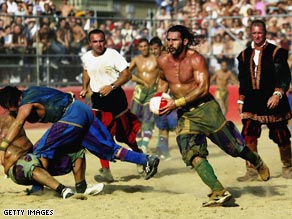
Calcio Storico Fiorentino, June 24-28
This traditional game is a testosterone-fueled mix of football and fighting played by young men from the four Florentine quarters: San Giovanni, Santa Maria Novella, Santo Spirito and Santa Croce. They may look amusing in their medieval-style pantaloons but there is nothing funny about the level of competition in this fierce sport -- players often seem more preoccupied with fighting each other than getting the ball in the net, which runs the length of the pitch. An amazing spectacle, especially because it is held in the shadow of the beautiful Santa Croce church in the piazza below.
Festa del Grillo (Cricket Festival), Ascension Day
If you are feeling low on luck, the cricket festival, which heralds the start of spring, could boost your fortunes. Singing crickets are thought to bring good luck and in days gone by children would fashion cages and hunt for crickets to take to the Parco delle Cascine. Nowadays, the crickets are likely to be fake, but you can buy them housed in endearing pastel-painted confections with windows and roofs -- and they are still considered lucky.